
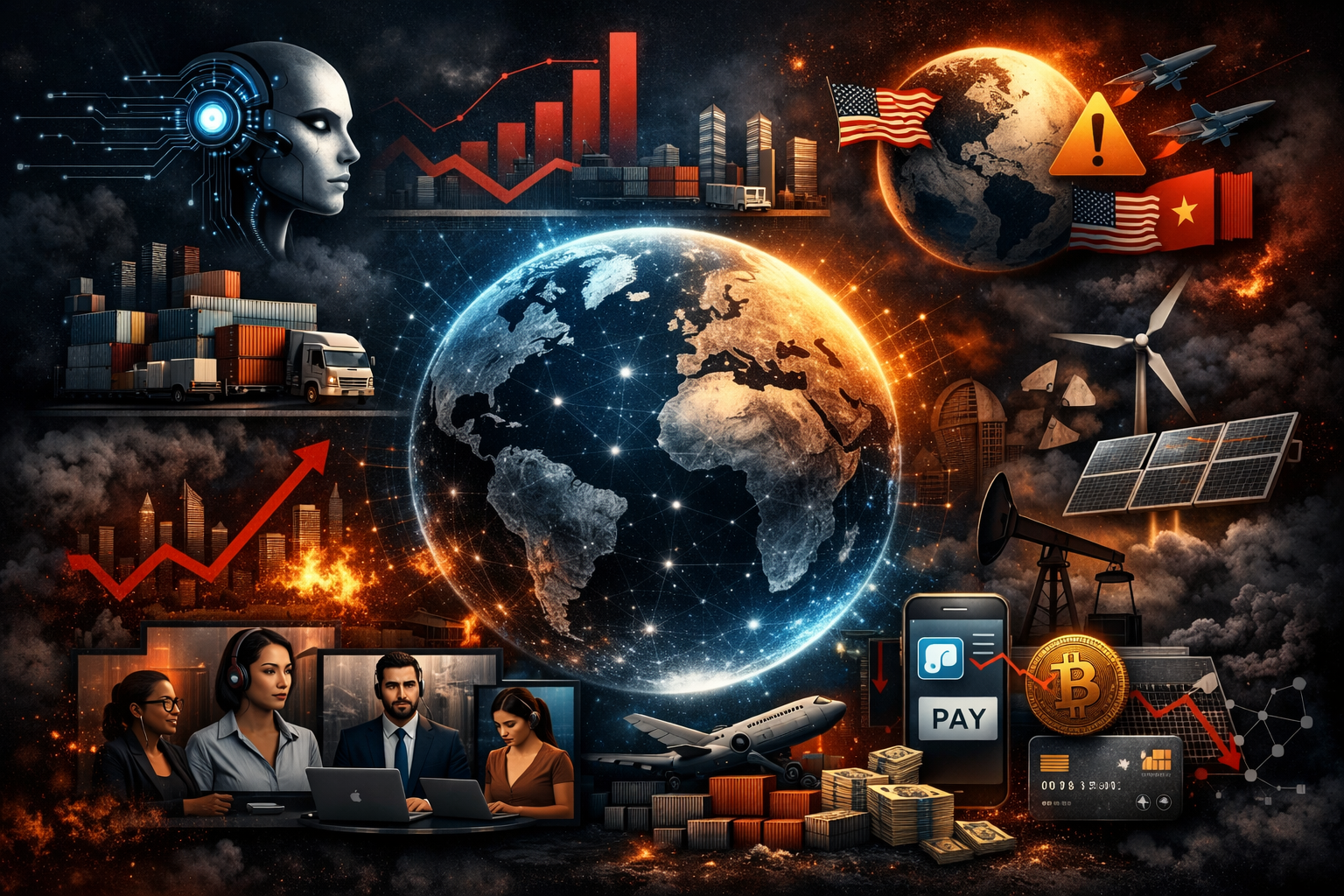
The global business landscape is shifting faster than at any point in the last decade. Companies across every continent are adapting to new technologies, evolving consumer expectations, and a world economy that is becoming more unpredictable. As we move through 2026, several powerful trends are redefining how international business operates — and who will lead the next era of global growth.
1. AI Becomes the Core of Global Business
Artificial intelligence is no longer a competitive advantage — it’s the foundation of modern business. From automated logistics to predictive analytics, companies are using AI to cut costs, accelerate decision‑making, and unlock new revenue streams. Nations investing heavily in AI infrastructure are quickly becoming global economic leaders.
2. Supply Chains Transform for a New Era
After years of disruptions, businesses are rebuilding supply chains to be smarter, faster, and more resilient. Many companies are shifting production closer to home, adopting real‑time tracking technologies, and diversifying suppliers to avoid future global shocks. This marks a major evolution in how international trade functions.
3. Emerging Markets Gain Global Influence
Rapid growth in Asia, Africa, and South America is reshaping the balance of global power. Expanding middle classes, booming digital adoption, and rising foreign investment are turning emerging markets into essential engines of the world economy. Companies that ignore these regions risk falling behind.
4. Sustainability Becomes a Global Business Priority
Environmental responsibility is now directly tied to profitability. Governments are tightening regulations, investors are demanding transparency, and consumers are choosing brands that prioritize sustainability. Businesses leading in renewable energy, low‑carbon production, and circular economy models are seeing record growth.
5. Digital Payments Revolutionize International Commerce
The rise of digital wallets, blockchain transactions, and instant cross‑border payments is transforming how money moves around the world. Fintech companies are challenging traditional banks by offering faster and more accessible financial services. This shift is especially impactful in developing countries, where mobile banking is becoming the primary financial tool.
6. Remote Work Creates a Global Talent Marketplace
Companies are no longer limited to local hiring. Remote work has opened the door to global talent, allowing businesses to recruit the best professionals from anywhere in the world. This new reality is reshaping salaries, competition, and the structure of the international workforce.
7. Geopolitical Tensions Redefine Global Strategy
Conflicts, sanctions, and shifting alliances are forcing companies to rethink their global strategies. Businesses are diversifying markets, reducing dependency on single regions, and preparing for long-term geopolitical uncertainty. Flexibility and adaptability are becoming essential for survival.
Conclusion
The world economy is evolving at lightning speed. Companies that embrace innovation, sustainability, and global adaptability will shape the future of international business. Pulse News will continue to follow these global shifts to keep readers informed and ahead of the curve.