

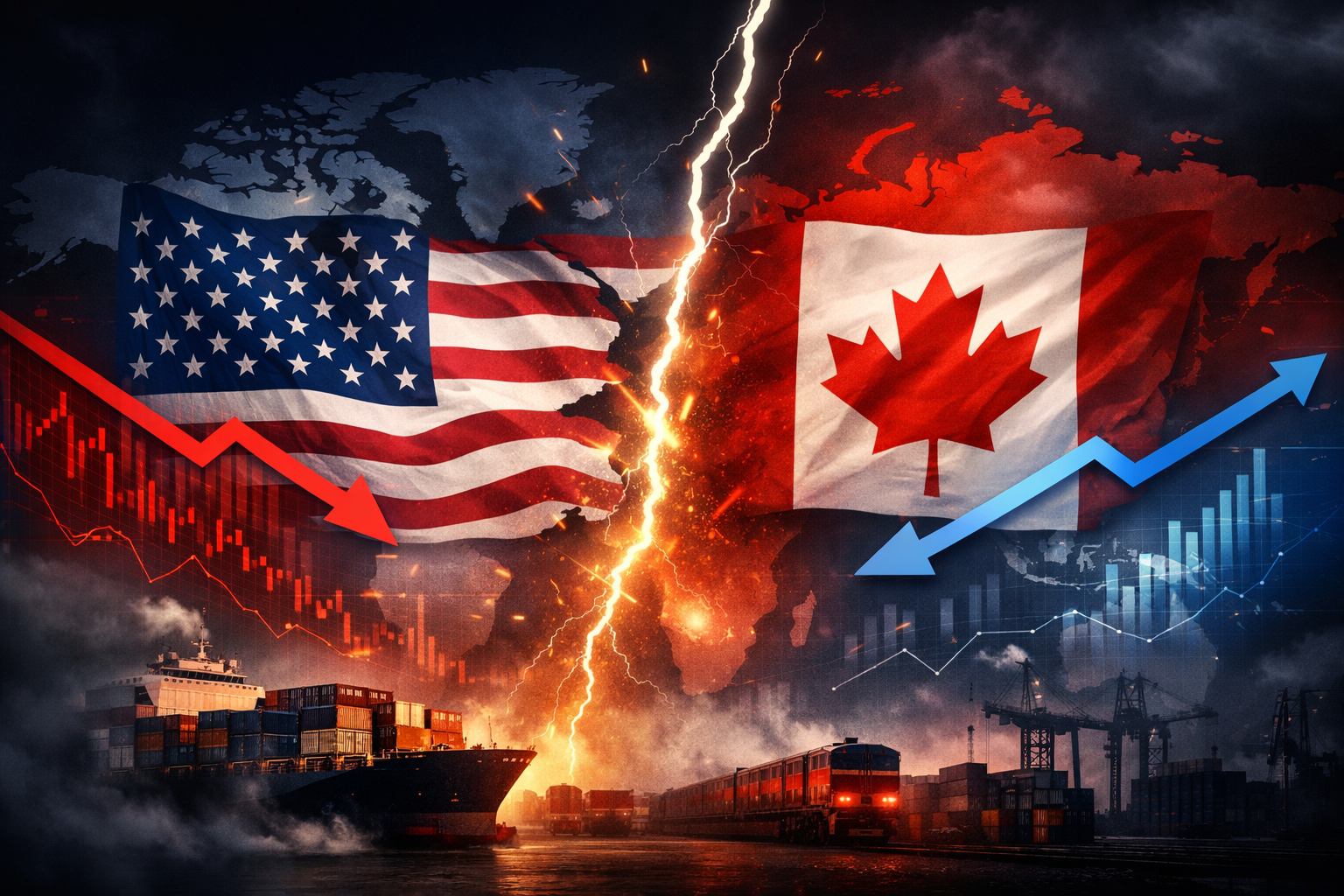
Tensions between the United States and Canada escalated sharply in June 2026 as both countries entered a new phase of tariff retaliation. What began as a dispute over manufacturing subsidies and agricultural protections has now evolved into a full‑scale trade confrontation affecting billions of dollars in goods.
The tariff war is reshaping cross‑border commerce, disrupting supply chains, and raising concerns among businesses on both sides of the border.
1. How the Tariff Conflict Started
The conflict intensified after the U.S. announced new tariffs targeting Canadian steel, aluminum, and lumber — sectors that have historically been flashpoints in North American trade. Washington justified the move by citing “unfair competitive advantages” and “market distortions.”
Canada responded within days, imposing counter‑tariffs on:
- U.S. agricultural products
- Processed foods
- Industrial machinery
- Consumer goods
This rapid escalation triggered immediate economic shockwaves.
2. Impact on Businesses and Consumers
The tariff war is already affecting key industries:
- Manufacturing: Cross‑border factories face rising costs and delays.
- Agriculture: Farmers in both countries warn of declining exports and oversupply.
- Retail: Prices for everyday goods are expected to rise in the coming weeks.
- Transport & Logistics: Trucking companies report longer inspections and increased paperwork.
Economists warn that if the conflict continues, it could slow economic growth in both countries.
3. Political Reactions and Diplomatic Tension
Officials in Ottawa and Washington have exchanged strong statements, each accusing the other of destabilizing North American trade. Diplomatic talks have begun, but early discussions show little progress.
Analysts note that both governments face domestic pressure to “stand firm,” making compromise more difficult.
4. Global Consequences
The U.S.–Canada tariff war is drawing international attention because:
- Both countries are major players in global trade
- Their economies are deeply interconnected
- Disruptions in North America affect global supply chains
Markets reacted with volatility as investors fear broader economic fallout.
5. What Comes Next?
Trade experts say the next few weeks will be critical. Possible outcomes include:
- A negotiated rollback of tariffs
- Further escalation affecting energy, automotive, or technology sectors
- Long‑term restructuring of North American supply chains
Businesses are urging both governments to reach a resolution quickly to avoid deeper economic damage.
Conclusion
June 2026 marks one of the most significant trade confrontations between the U.S. and Canada in recent years. As tariffs rise and tensions grow, the world is watching closely to see whether diplomacy can prevent a prolonged economic conflict.
Pulse News will continue to monitor the situation and provide updates as the story develops.